I think that patent applications—where human ingenuity meets dreams of profit, within the straitjacket of line diagrams and legal prose—might be my favorite literary form. A tour through the year in food patents reveals several understated gems, from this “Grater for Gratable Food Products” to ConAgra’s “Proportional Length Food Slicing System.”
2010年12月30日星期四

2010年12月29日星期三
“Brusli?” No. Chuck Norris
Action-movie hero Chuck Norris has a holiday hit on his hands–in the Czech Republic.
The 70-year-old martial artist-made famous by tough-guy roles in 1980s films such as “Forced Vengeance” and “Missing in Action”–is starring in a series of TV commercials here for T-Mobile and its satellite-TV service.
The ads, featuring Mr. Norris in humorous encounters with Czech Christmas customs, have turned into a pop-culture phenomenon, which is starting to spread outside of the Czech Republic into Central Europe.
One of the spots–all produced by the Prague office of Saatchi & Saatchi–shows Mr. Norris in the kitchen of a Czech family preparing a traditional Christmas Eve dinner of fresh carp. His hostess asks Mr. Norris to kill the still flapping fish with a wooden mallet. “You’re the master,” she says.
How to Convert RM Files to AVI Files
Tutorial for how to convert RM Files to AVI Files:
Step 1: Free download and install this software
Then add RM file you want to convert by clicking Add file button
Tip: You can add multiple RM files at one time.
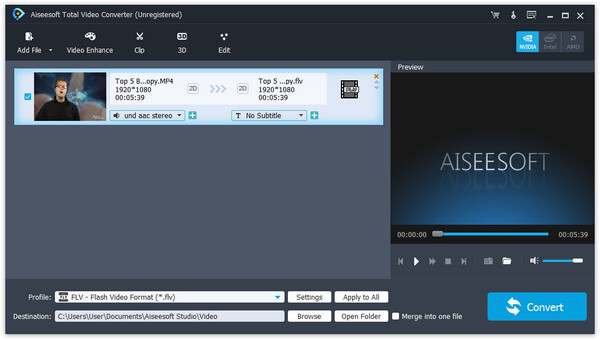
Step 2: Profile and destination
Click "Profile" drop-down button to choose the format you need (AVI here), then click "Browse" button to choose destination folder for saving output files. (seeing interface above)
Step 3: Edit for better output file
Click Effect, Trim, Crop, Settings button to further personalize output AVI files.
Step 4: Start conversion
The last step is to press Start button to convert RM to AVI.
For more details, please go to: Convert RM files to AVI files.2010年12月27日星期一
DVD to iPod Suite Guide
This passage is to show you how to rip DVD and convert video to iPod MP4 with Aiseesoft DVD to iPod Suite.

It will include two parts, you can click the following links to learn details?
2010年12月25日星期六
How to Convert and Edit HD Video
Because of the widely using of HD Camcorder, now it is really convenient to record family parties and other things you are interested in. Nowadays, people would like to share their things with the rest of the world through Internet, such as youtube.com and other video websites.
This guide aims to show you how to convert and edit the video you recorded using your HD camcorder
What you need is a powerful HD Video Converter.
Step 1: Load Video
Click "Add File" to load the video that you want to convert to Aiseesoft MTS Converter.
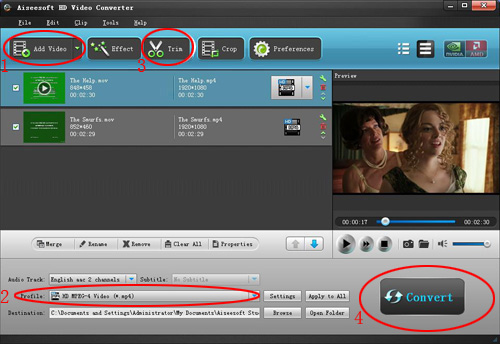
Step 2: Choose Your Output Profile and Settings
From "Profile" drop-down list you can choose your output profile according to your need.
You can also click "setteing" adjust the settings of your output video, such as "video/audio encoder", "Video/audio Bitrate", "Channels", "Resolution" and so on..
Step 3: Video Editing
This powerful MTS Converter allows you to do many video editings.
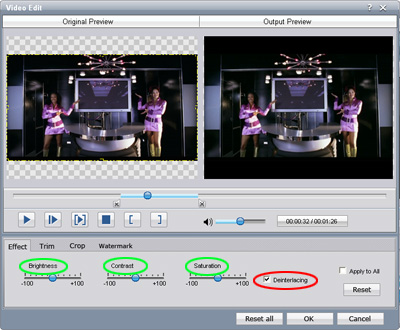
1. Click "Effect" to make special effect for your movie.
You can adjust the "Brightness", "Contrast", "Saturation" and also you can use "deinterlacing" to improve you output effect.
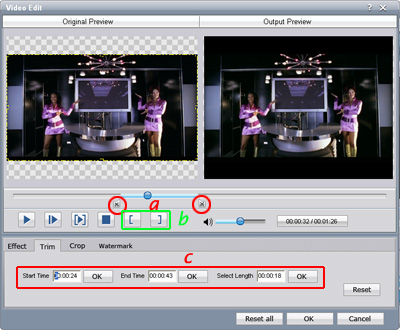
2. Trim:
"Trim" function allows you to pick up any part of your video to convert. You can just convert a part of your video that you want.
3: Crop:
Cut off the black edges of the original movie video and watch in full screen on your iPod using the "Crop" function.
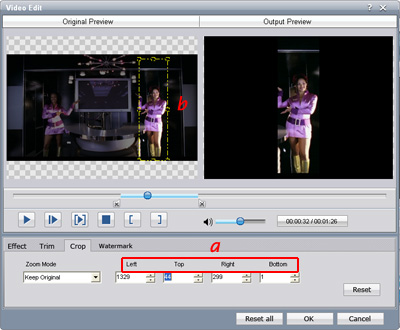
Step 4: Conversion
After you have done all the steps above you can click "Start" button to start your conversion.
Here I also recommend you some High Definition video converter, MTS Converter, TS Video Converter.
2010年12月24日星期五
Skype Talks About Just How Full That Half a Glass Is (Updated: Glass Now 90 Percent Full)
While some people are still having trouble using Skype and a few features remain unavailable, the Internet telephony company issued a statement on Thursday touting those services that have returned to operation after a massive outage on Wednesday.
“In the last hour, we’ve seen evidence of a significant increase in the number of people online,” Skype said in a blog posting. “Because of the way the Skype software works, it’s not possible for anyone to obtain an exact figure, but we now estimate it to be over 10 million.”
However, according to a graphic elsewhere on the company’s Web site (see above), that’s still short of the service at peak times (and one would assume that, absent an outage, two days before Christmas might be one of those peak sorts of times).
The blog goes on to mention a few of the other lingering issues. “Please note that some features may not work as reliably as expected,” it said, adding that “peoples’ online status may be slow to update, and instant messages might not be delivered as quickly as they are normally. Group video calling will take longer to return to normal.”
Of course, all that is a lot better than yesterday, when the bulk of the service was down for millions of people.
UPDATE, 11:50 am: Things are looking up, according to the latest post from CEO Tony Bates. He reports that there are now about 16.5 million users online, about 80 percent of normal for this time of day. And a make-good offering is in the works. “I realise that it’s difficult to compensate you for not being able to talk to or see your friends, family or colleagues, but we’re planning to offer Skype Credit vouchers to all of our loyal paying customers to thank you for your continued support,” said Bates.
2010年12月22日星期三
Help! I’m Addicted to CityVille
Earlier this month, I had a lot of nervous energy and a bunch of spare time on my hands, since my husband was in the hospital for an unusually complicated appendectomy. He’s much better now, but I haven’t fully recovered, because I picked up a bad case of addiction to CityVille, the newly released social game from Zynga.

CityVille is the perfect hospital waiting room activity. You click to create buildings and plant crops, click to harvest them and collect money from your shops, click to visit your friends’ cities and help them do the same things.
Unlike in a real city, everything you can possibly accomplish in the game is good. You receive money, goods, reputation points, energy and random bonus prizes constantly.
Most of these are useful, but some of them are not. For instance, I currently have a stock of 22 virtual danishes received as bonuses from my in-game coffee shop, and no way to spend them.
Among the early adopter types I know in the tech industry, there’s a sense that casual gaming on Facebook serves an entirely different demographic from their own. The thinking is that games from Zynga and the like replace relatively mindless activity like watching soap operas.
But as someone who has just reorganized her virtual retail shops to be surrounded by virtual trees, so as to accumulate more virtual bonus points, I can see how social gaming–especially as it gets more social–might appeal to the desire for mindless diversions in all of us.
And, I began to get an answer to a question I am asked a lot: Why are so many people playing these seemingly meaningless games?
CityVille is Zynga’s latest attempt to extend the dominance of its breakout social game FarmVille, which has long been the most popular such diversion on Facebook.
Of all of Zynga’s games, CityVille is heralded to be the most social to date, with new features such as a franchise system that allows users to actually participate in the building of their friends’ cities. Personally, I’ve never gotten into FarmVille, although it’s obviously quite addictive as well and hugely popular.

Chalk it up to the new social features, the slightly less awkward and cutesy 3-D graphics, or a momentary openness to mindless diversion on my part, but CityVille is the only Facebook game that’s truly sucked me in so far.
Zynga says CityVille is its fastest-growing game ever. According to AppData, CityVille has 44 million monthly active users, for third place overall (and only 12 million behind FarmVille).
There are no consequences in CityVille and there is no strategy. There’s also no winning (rather, as in FarmVille, an endlessly extending horizon of tasks to complete).
The worst thing that can happen is a crop can wither or you can allocate your “energy” to collecting rent and not have enough to empty the cash registers at your stores.
But, not to worry–come back in five minutes and there’s another unit of energy waiting for you.
CityVille is satisfying on a superficial level that I hadn’t thought possible. It’s not even like Angry Birds, my former casual game of choice, which breaks all sorts of age and language barriers in its simplicity, but still requires you to position the slingshot correctly and think through the physics of the various projectiles.
In CityVille, all you do is click, click, click.
Zynga seems to want three things from users: Their time, their money and their recruitment of their friends. As for time, I’ve given plenty of it, although you usually run out of stuff to do about 15 minutes into any one session (Zynga wouldn’t want game play to be a burden or feel too complicated).
But I’m not sure my obsession is paying off for Zynga. I’ve spent a grand total of 50 cents on the game. That’s because I wanted to spend the 15 Facebook credits I’d gotten as part of a launch promotion, but Zynga had a minimum purchase of 20 credits. Coughing up two quarters got me the difference–and it also hooked up my Facebook account to my PayPal account for the first time.
I currently have 20 CityVille “neighbors.” They are Facebook connections from all different parts of my life, including high school friends, tech industry people and fellow reporters. We get credits for heading over to each other’s cities and helping out, accepting roles at each other’s city halls and other municipal buildings and setting up franchises in their cities and resupplying them.

And Zynga constantly harasses us to post on our own or other people’s Facebook walls to ask them for in-game gifts and brag about in-game achievements.
Conscious of polluting other people’s walls and admitting to people how much CityVille I play, I usually decline all the offers to broadcast my CityVille needs and accomplishments. But it’s clear Zynga could stand to add even more communication channels if it wanted to; a friend recently emailed me off-game to ask if I could hurry up and send him a CityVille zoning permit.
I get the sense most of my particular set of neighbors haven’t given Zynga a lot of cash for virtual goods, considering our cities are growing at about the same rates and I see them on there at least once a day helping tend to my crops and resupplying their franchises. There are no in-game advertisements.
A few of my neighbors, however, have accumulated premium goodies galore. A certain Facebook exec’s city is decorated with paid-for doodads like a basketball court, tennis court and bronze statue–but I imagine it’s not too hard for him, of all people, to stock up on Facebook credits.
A particular start-up CEO who’s my virtual neighbor seems to play on an hourly basis. He has already hit level 35. You know that somewhere a Zynga engineer is scurrying to create more tasks and content to add more levels to keep up with him and other addicts.
And only one of my neighbors appears to have never returned to the game after setting up her initial city.
Meanwhile, my own city keeps on growing. I’m currently at level 26. I’m now the mayor of my city and considering a run for governor.
But, now that I’m back from the hospital, I’d honestly really like to stop playing this game and let the healing begin.
2010年12月21日星期二
EBay Acquires Berlin-Based brands4friends for $200 Million
It’s been a busy shopping season for eBay, which has made its third acquisition in as many weeks.
Today, eBay said it has acquired brands4friends, a German online retailer for $200 million in cash. Earlier this month, eBay announced the acquisitions of Milo, which keeps a database of local retailers’ inventory, and Critical Path, a mobile application development shop.
EBay expects brands4friends to strengthen its position as a leading online fashion destination in Europe. Brands4friends claims to be “Germany’s largest online shopping club,” which offers top brands at reduced prices to members through limited daily offers.
Online shopping clubs account for 20 percent of online fashion sales in Europe, according to eBay’s own research.
The 3-year-old company has about 3.5 million members and 200 employees.
As part of the deal, eBay will also assume brands4friends’ equity interests in U.K. shopping club secretsales.com and in Japan’s brands4friends.jp. The acqusition is expected to close in the first quarter, pending regulatory approval.
2010年12月20日星期一
Top 5 Best DVD to iPod Converter Review
You may haven’t figured out how to rip your DVD to your iPod, and played in the right resolution for your iPod. And often, you are confused about which software is the best one. Everybody has its own opinion about that. Here, I give you top 5 best DVD to iPod Converter Review. You can choose what you think the best DVD to iPod Converter among them. I will take 6 points into review.
1) Cost/Performance: Everybody wants to gain more with less money.
2)Video Quality: Someone often uses the video iPod to watch movie, so the output video quality should be considered seriously. Top DVD to iPod output without any loss in the video and image quality of the exports. To enjoying the high definition video is of great pleasure. Or else, not only your eyes may get hurt; the annoying jumpy and mosaics will also bother you.
3) Speed: Convert DVD often takes time, an hour DVD movie takes around thirty minutes to convert to MPEG-4 movie, if you have multiple DVDs to be converted, a high speed converter would be your best bet, or else, you will waste much time on the conversion, and your computer will be tied to the process.
4) Quality of DVD: Sometimes, rip DVD to iPod according to the original DVD quality, or the types of the DVD to determine the ripped file quality.
5) Easy to use: There are still many iPod users knew little about computer, so complicated parameter settings will strain their brain, as a result, a application with simple interface and steps is the acceptable.
6) Personal Demands: For example, someone just wants to convert part of the DVD video, or others want the special output video format like Apple TV compliant forms and etc.
Concerning the above factors, I've selected five DVD to iPod converters for reference.
DVD to iPod Converter for Windows Review:
First: Aiseesoft DVD to iPod Suite.
Second: Aiseesoft DVD to iPod Converter.
Third: Tipard DVD to iPod Converter.
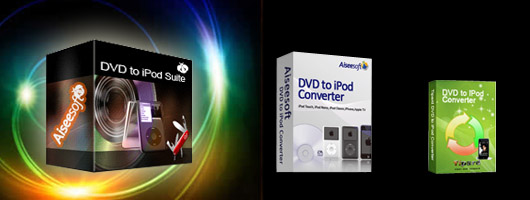
Comment: After you install Aiseesoft DVD to iPod Converter, You will be greatly impressed by its friendly interface. In addition to its top conversion function, it provides the function to optimize your conversion file, set the parameters for you, crop video, trim video, select subtitle etc. If you have many DVDs must be converted and cropped. Aiseesoft DVD to iPod Converter meet your needs.
We tested Tipard DVD to iPod Converter, it is amazing that Regardless of the DVD media we used, the ripped files looked and sounded great. It is also combined with many useful features, trim your video clips; crop the play region of video; set the video effect. If you care about the Cost/Performance, and you care about the video/ audio quality, Tipard DVD to iPod Converter is suit for you.
As for Aiseesoft DVD to iPod Suite, It is the top favorable software, I believe. The reason is that it combines DVD to iPod Converter, iPod to Computer Transfer and iPod Movie Converter into one. With this powerful software, you not only can rip DVD to your iPod, but also convert any video formats to your iPod supporting one. As well as Transfer music and video from iPod to computer. If you want to Rip DVD and convert your favorite video including the FLV format to your iPod with one and inexpensive software, Aiseesoft DVD to iPod Suite is the best one.
DVD to iPod Converter for Mac Review:
First: Aiseesoft DVD to iPod Converter for Mac
Second: Tipard DVD to iPod Converter for Mac
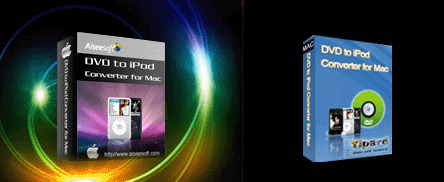
Comment: Similarity, the above two Mac software is same on the main function. As for the interface, it’s up to you preference. Frankly, Tipard DVD to iPod Converter for Mac take a little shorter to convert, but considering the video quality, Aiseesoft DVD to iPod Converter for Mac ripped DVD video is more remarkable. Of course, you can test it by yourself. You would found the video conversions are just as clear as the original, sometimes even better.
2010年12月18日星期六
New iPod touch 2G Guide
A big surprise turn up at 9th Sep for all iPod fans – the new iPod touch 2G and Nano 4G released. It’s really lucky and exciting to get a new iPod Touch 2G. And in order to help iPod users to learn more about it, I collected some information for this new iPod touch 2G guide. And it also includes how to enjoy the multimedia on you new iPod touch 2G such as download free video to iPod, convert DVD to iPod and transfer music video from iPod to iPod and iPod to computer.
Price:
As expected, the biggest news with Apple's second-generation iPod Touch is its drastically reduced price. The 8GB version of the iPod Touch 2G is now $229 (down from $299), the 16GB is $299 (down from $399), and the 32GB is $399 (down from $499).
Size:
The new iPod touch 2G is smaller and lighter than the original, 3.5 inch touch-screen, measuring 4.1 by 2.4 by 0.33 inches and weighing 4.05 ounces. With its rounded edges, flush display and curved, more compact design, the iPod touch 2G is promised to be more comfortable to hold and more portable than ever.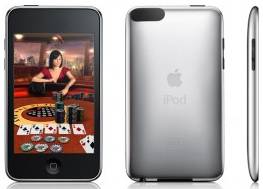
Game:
iPod touch 2G users can choose from hundreds of gaming titles such as "Spore Origins" and "Scrabble" from Electronic Arts, and "Real Football 2009" from Gameloft available on iTunes or directly through the App Store application on the iPod touch. The App Store works over Wi-Fi, enabling users to browse, purchase and wirelessly download applications.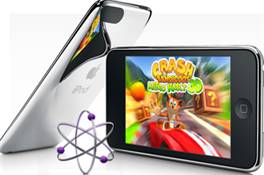
Battery and “Genius”
The new iPod touch 2G promises up to 36 hours of music playback or six hours of video playback on a single charge. It also works with the new iTunes 8 Genius feature, allowing users to automatically create playlists while on the go. These playlists can also be synchronized with iTunes 8 servers.
Others features in new iPod touch 2G
Build-in accelerometer for casual listening; more convenient volume control button on the edge; the newest improvements “Nike+iPod” which can help you track your workouts by slipping a Nike+iPod sensor into you Nike+ shoes.
Then, Let’s talk about how to enjoy multimedia on your New iPod touch 2G
Part 1: How to free download video to your new iPod Touch 2G.
I always download free video and music from Youtube and limewire.
Youtube streaming videos are all FLV formats, so you need to play the video with a flash player programe on your computer, and if you want to put them on your new iPod touch 2G, use a iPod video Converter to convert FLV to MP4 format.
I got this totally free Youtube downloader, just enjoy.
http://www.aiseesoft.com/free-youtube-downloader.html
Limewire is a fast and popular freeware working on Windows, Linux and Mac OS. Through the P2P (peer-to-peer) network, you can free download various video and audio files by keywords searching. Most of its video formats is MPEG, so convert them and transfer to your iTunes then iPod touch 2G.
http://www.limewire.com/
Part 2: How to convert DVD to iPod Touch 2G
The new iPod touch 2G can only play MP4 and H.264 video, but DVD movie is MEPG, MPEG-2 video and CSS protected, so you need an application to convert DVD to MP4 video, then sync it to iPod touch 2G via iTunes.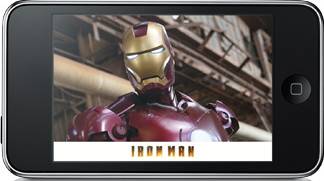
To complete Part 1 and Part 2 I recommend you an iPod studio pack which includes a DVD to iPod converter and video to iPod converter.
You can get familiar with the apps by using this detailed step by step guide:
http://www.aiseesoft.com/article/download-dvd-pdf-youtube-videoto-ipod.html
Part 3: How to convert files back to your computer and transfer between iPod
Because iTunes prevents you from copying music or video from the iPod touch 2G back to computer, so you need a special tool to do that.
Yamipod, Aiseesoft iPod to Computer Transfer, Sharepod, iDump
And then re-add it to your iTunes library and sync it to other iPod touch 2G.
Free Trial: Free download Aiseesoft DVD to iPod Suite
view the datail of ipod nano chromatic/touch 2 converter
2010年12月16日星期四
How to Rip DVDs to iPod, iPhone, etc. with Handbrake
Do you want to watch your DVDs on your iPod, iPhone or Apple TV? Here's a guide which explains how to use an excellent software - Handbrake to rip DVD's into MPEG-4 video files.
Requirements:
1. VLC player (Handbrake 0.9.3 and higher)
2. iTunes 6.0.1 or later
3. QuickTime 7.0.3 or later
4. 500 MHz processor or better with at least 16MB of video RAM
Step 1: Download Handbrake
Download Handbrake from here and install it. Handbrake is free. If you already have Handbrake installed, please check to see if your version is out of date. Several new improvements have been made recently to the program, specifically for the iPod and iPhone.
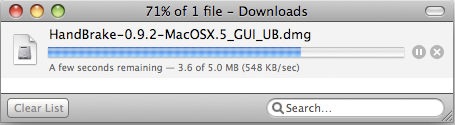
Step 2. Insert DVD
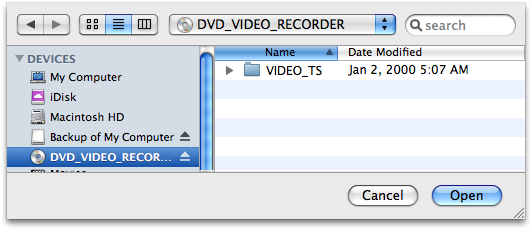
Grab a video DVD and put it into your computer. Handbrake can only convert standard video DVD's that you would normally play in a DVD player. If you have a DVD-ROM with video files saved on it as individual files (AVI, MPG, WMV, MOV, etc), Handbrake will NOT be able to convert these files. Handbrake only wants standard video DVD's.
Depending on your computer's preferences, the DVD Player application might automatically open. If it does, just quit it. Only one application should be accessing the DVD at a time.
Launch Handbrake. A screen asking you to select a DVD will appear. Select the DVD you've inserted into your computer and press the Open button.
Step 3: Download VLC player
What version of Handbrake are you using? As of version 0.9.3, Handbrake will no longer natively rip DVDs. Weird right? I wonder if they were getting some pressure from the movie industry. But don't give up on Handbrake just yet. You can still use Handbrake 0.9.3 to rip DVDs, you just need to install VLC on your machine first.
If you see the VLC screen like the one shown below, then you need to download and install VLC.
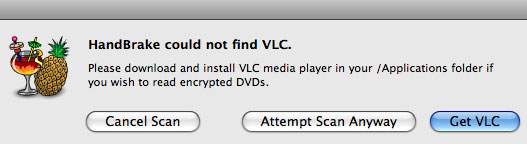
VLC Download Page:
http://www.videolan.org/vlc/
The VLC media player is a highly portable multimedia player for various audio and video formats (MPEG-1, MPEG-2, MPEG-4, DivX, mp3, ogg, etc.) as well as DVDs, VCDs, and various streaming protocols. It can also be used as a server to stream in unicast or multicast in IPv4 or IPv6 on a high-bandwidth network. Handbrake now uses some components of the VLC player and it must be installed if you want Handbrake to read DVDs.
The VLC media player is a highly portable multimedia player for various audio and video formats (MPEG-1, MPEG-2, MPEG-4, DivX, mp3, ogg, etc.) as well as DVDs, VCDs, and various streaming protocols. It can also be used as a server to stream in unicast or multicast in IPv4 or IPv6 on a high-bandwidth network. Handbrake now uses some components of the VLC player and it must be installed if you want Handbrake to read DVDs.
After you download VLC, you need to install it on Mac:
VLC for Mac OS X is distributed as a disk image. Download the .dmg file, open it, and copy VLC to your hard drive (for instance the /Applications folder). Open VLC by double-clicking on it.
Step 4: Source Settings
Handbrake will now scan your DVD. This makes take up to a minute or two depending on the contents of the DVD and the speed of your optical drive.
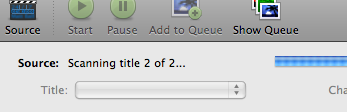
Title: By default, Handbrake will select the longest title in the list. However, this may not be the content you want.
Movies: If you are ripping a movie, the longest title is usually the main feature.
TV Shows: If you are ripping a DVD containing TV shows, you should see a list of several titles all about the same length. The shorter titles on the DVD are usually the video backgrounds used in the DVD menu screens and DVD extras like movie trailers. Unless you are a graphic artist, you probably don't want these tracks.
The shorter titles on the DVD are usually the video backgrounds used in the DVD menu screens and DVD extras like movie trailers. Unless you are a graphic artist, you probably don't want these tracks.

If you only want to rip one title but aren't sure which one, you can click on the Picture Settings button (bottom right of the Handbrake interface) and manually step through several frames of the title to see what it looks like.
NOTE: Sometimes Handbrake is unable to see every track on a DVD. We've noticed issues with very old DVD's from the mid-1990s (before the days of fancy menus and Bonus features) and some newer DVD's like Stealth. There are different techniques and methods to authoring DVD's Sometimes the tracks get nested in weird ways that prevents Handbrake from seeing them. Other DVD ripping applications like Mac The Ripper and OSex might be able to see these tracks. Look for the longest track. That is probably the main feature.
Step 5: Destination Settings
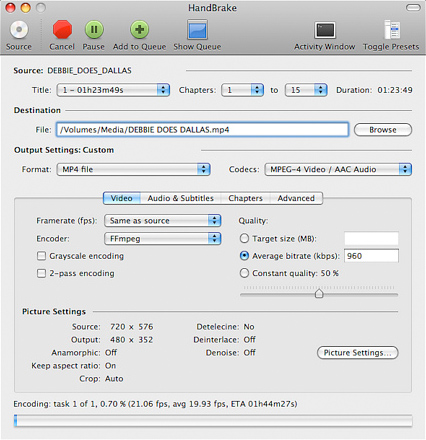
The Destination section has 3 settings you can modify: file format, codec and file destination.
File Destination: You can name your file and choose its destination using this box. Try to pick a location that has sufficient disk space to store the ripped file. On average, you need about 1 GB per full length movie.

Step 6: Select A Preset
Handbrake has a variety of handy DVD ripping presets for iPod, iPhone, Apple TV, Xbox, Sony PSP and many more. Just select a preset and Handbrake will automatically fill in all the settings for you.
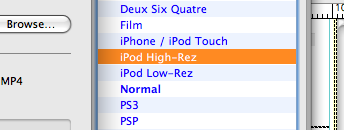
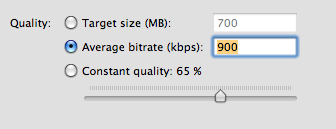
If you plan on watching this DVD on your iPod, iPhone or even Apple TV, we suggest you select iPod High-Rez and drop the average bitrate to 900 kbps. This will give you a nice high quality file that will work on both big (HDTVs) and small screens (iPod/iPhone) and won't take up a ton of hard drive space.
Step 7: Picture Settings
Click on the Picture Settings button to launch a separate window. The only thing you really want to do here is to compensate for interlaced or grainy, compressed looking video. Handbrake will have adjusted everything here for you based on the preset you selected.
Sometimes video files will have horizontal lines in them. This is called interlacing. To get rid of interlacing, try turning on the Deinterlace option and select "Fast." The image below is animated and will toggle between when the deinterlace option is turned on or off. You can really see the difference around the edge of the flipper.
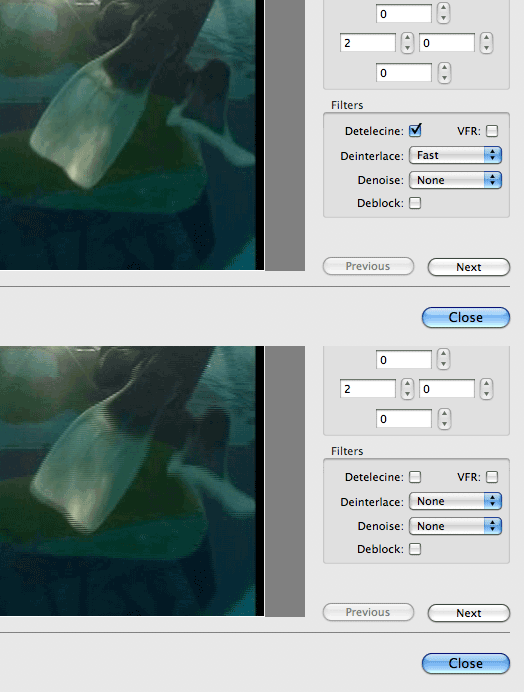
Denoise will help get rid of graininess and Deblock will help clean up blocky or compressed looking video. Experiment and try to make your video clip look the best possible.
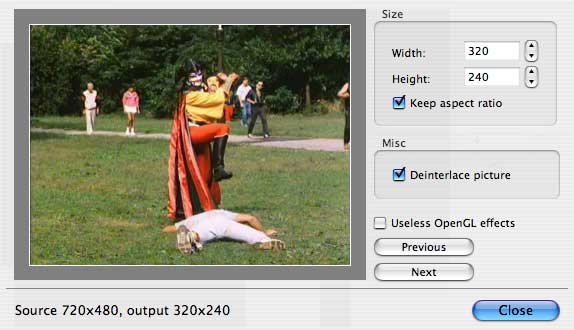
NOTE: Your iPod really only wants video files that are 320 pixels wide by 240 wide. If you don't plan on watching this ripped DVD on anything else, you can mess around with the settings. Turn on the "Keep aspect ratio button" and decrease the Width until it says 320. Handbrake will auto-adjust the height to match the width. If your video source is 3:4 (full-screen), the height will be 240. For wide-screen content, the height will be a lower number. This is fine and isn't something to worry about.
But if you plan on watching this video on your TV with an Apple TV or an iPod Video dock, then you should keep the video size big. If you don't have the money for an Apple TV, there's this amazing iPod video dock called the Keyspan TuneView. If you want to hook your iPod Video up to your TV, you should check out the TuneView.
Step 8: Rip
Finally! Click on the Rip button and stand back. The encoding time will depend on several variables including: the duration of the video file, the speed of your computer, what other activity your computer is currently doing, the codec you selected (H264 or MP4) and if you decided to do a 2-pass encoding or not.

Handbrake will attempt to provide you with an ETA. The time will increase if you Pause the encode or do anything that will hog the processor like start a 3D render in Maya. We suggest you do your DVD ripping overnight or at a time when you don't need to use your computer.
Handbrake will attempt to provide you with an ETA. The time will increase if you Pause the encode or do anything that will hog the processor like start a 3D render in Maya. We suggest you do your DVD ripping overnight or at a time when you don't need to use your computer.
Step 9: Import Into iTunes
Connect your iPod Video or iPhone to your computer using the cable it came with and open iTunes (Applications > iTunes).
Drag and drop the video file into your iTunes library, or select Add to Library... from the File menu.
Make sure the video file you just added to iTunes is in a Playlist that will get synced to your device.
Select "Sync"
The sync may take a few minutes. Once the import completed, you could find the file which is ripped by Handbrake on your iPod or iPhone.
Requirements:
1. VLC player (Handbrake 0.9.3 and higher)
2. iTunes 6.0.1 or later
3. QuickTime 7.0.3 or later
4. 500 MHz processor or better with at least 16MB of video RAM
Step 1: Download Handbrake
Download Handbrake from here and install it. Handbrake is free. If you already have Handbrake installed, please check to see if your version is out of date. Several new improvements have been made recently to the program, specifically for the iPod and iPhone.
Step 2. Insert DVD
Grab a video DVD and put it into your computer. Handbrake can only convert standard video DVD's that you would normally play in a DVD player. If you have a DVD-ROM with video files saved on it as individual files (AVI, MPG, WMV, MOV, etc), Handbrake will NOT be able to convert these files. Handbrake only wants standard video DVD's.
Depending on your computer's preferences, the DVD Player application might automatically open. If it does, just quit it. Only one application should be accessing the DVD at a time.
Launch Handbrake. A screen asking you to select a DVD will appear. Select the DVD you've inserted into your computer and press the Open button.
Step 3: Download VLC player
What version of Handbrake are you using? As of version 0.9.3, Handbrake will no longer natively rip DVDs. Weird right? I wonder if they were getting some pressure from the movie industry. But don't give up on Handbrake just yet. You can still use Handbrake 0.9.3 to rip DVDs, you just need to install VLC on your machine first.
If you see the VLC screen like the one shown below, then you need to download and install VLC.
VLC Download Page:
http://www.videolan.org/vlc/
The VLC media player is a highly portable multimedia player for various audio and video formats (MPEG-1, MPEG-2, MPEG-4, DivX, mp3, ogg, etc.) as well as DVDs, VCDs, and various streaming protocols. It can also be used as a server to stream in unicast or multicast in IPv4 or IPv6 on a high-bandwidth network. Handbrake now uses some components of the VLC player and it must be installed if you want Handbrake to read DVDs.
The VLC media player is a highly portable multimedia player for various audio and video formats (MPEG-1, MPEG-2, MPEG-4, DivX, mp3, ogg, etc.) as well as DVDs, VCDs, and various streaming protocols. It can also be used as a server to stream in unicast or multicast in IPv4 or IPv6 on a high-bandwidth network. Handbrake now uses some components of the VLC player and it must be installed if you want Handbrake to read DVDs.
After you download VLC, you need to install it on Mac:
VLC for Mac OS X is distributed as a disk image. Download the .dmg file, open it, and copy VLC to your hard drive (for instance the /Applications folder). Open VLC by double-clicking on it.
Step 4: Source Settings
Handbrake will now scan your DVD. This makes take up to a minute or two depending on the contents of the DVD and the speed of your optical drive.
Title: By default, Handbrake will select the longest title in the list. However, this may not be the content you want.
Movies: If you are ripping a movie, the longest title is usually the main feature.
TV Shows: If you are ripping a DVD containing TV shows, you should see a list of several titles all about the same length. The shorter titles on the DVD are usually the video backgrounds used in the DVD menu screens and DVD extras like movie trailers. Unless you are a graphic artist, you probably don't want these tracks.
The shorter titles on the DVD are usually the video backgrounds used in the DVD menu screens and DVD extras like movie trailers. Unless you are a graphic artist, you probably don't want these tracks.
If you only want to rip one title but aren't sure which one, you can click on the Picture Settings button (bottom right of the Handbrake interface) and manually step through several frames of the title to see what it looks like.
NOTE: Sometimes Handbrake is unable to see every track on a DVD. We've noticed issues with very old DVD's from the mid-1990s (before the days of fancy menus and Bonus features) and some newer DVD's like Stealth. There are different techniques and methods to authoring DVD's Sometimes the tracks get nested in weird ways that prevents Handbrake from seeing them. Other DVD ripping applications like Mac The Ripper and OSex might be able to see these tracks. Look for the longest track. That is probably the main feature.
Step 5: Destination Settings
The Destination section has 3 settings you can modify: file format, codec and file destination.
File Destination: You can name your file and choose its destination using this box. Try to pick a location that has sufficient disk space to store the ripped file. On average, you need about 1 GB per full length movie.
Step 6: Select A Preset
Handbrake has a variety of handy DVD ripping presets for iPod, iPhone, Apple TV, Xbox, Sony PSP and many more. Just select a preset and Handbrake will automatically fill in all the settings for you.
If you plan on watching this DVD on your iPod, iPhone or even Apple TV, we suggest you select iPod High-Rez and drop the average bitrate to 900 kbps. This will give you a nice high quality file that will work on both big (HDTVs) and small screens (iPod/iPhone) and won't take up a ton of hard drive space.
Step 7: Picture Settings
Click on the Picture Settings button to launch a separate window. The only thing you really want to do here is to compensate for interlaced or grainy, compressed looking video. Handbrake will have adjusted everything here for you based on the preset you selected.
Sometimes video files will have horizontal lines in them. This is called interlacing. To get rid of interlacing, try turning on the Deinterlace option and select "Fast." The image below is animated and will toggle between when the deinterlace option is turned on or off. You can really see the difference around the edge of the flipper.
Denoise will help get rid of graininess and Deblock will help clean up blocky or compressed looking video. Experiment and try to make your video clip look the best possible.
NOTE: Your iPod really only wants video files that are 320 pixels wide by 240 wide. If you don't plan on watching this ripped DVD on anything else, you can mess around with the settings. Turn on the "Keep aspect ratio button" and decrease the Width until it says 320. Handbrake will auto-adjust the height to match the width. If your video source is 3:4 (full-screen), the height will be 240. For wide-screen content, the height will be a lower number. This is fine and isn't something to worry about.
But if you plan on watching this video on your TV with an Apple TV or an iPod Video dock, then you should keep the video size big. If you don't have the money for an Apple TV, there's this amazing iPod video dock called the Keyspan TuneView. If you want to hook your iPod Video up to your TV, you should check out the TuneView.
Step 8: Rip
Finally! Click on the Rip button and stand back. The encoding time will depend on several variables including: the duration of the video file, the speed of your computer, what other activity your computer is currently doing, the codec you selected (H264 or MP4) and if you decided to do a 2-pass encoding or not.
Handbrake will attempt to provide you with an ETA. The time will increase if you Pause the encode or do anything that will hog the processor like start a 3D render in Maya. We suggest you do your DVD ripping overnight or at a time when you don't need to use your computer.
Handbrake will attempt to provide you with an ETA. The time will increase if you Pause the encode or do anything that will hog the processor like start a 3D render in Maya. We suggest you do your DVD ripping overnight or at a time when you don't need to use your computer.
Step 9: Import Into iTunes
Connect your iPod Video or iPhone to your computer using the cable it came with and open iTunes (Applications > iTunes).
Drag and drop the video file into your iTunes library, or select Add to Library... from the File menu.
Make sure the video file you just added to iTunes is in a Playlist that will get synced to your device.
Select "Sync"
The sync may take a few minutes. Once the import completed, you could find the file which is ripped by Handbrake on your iPod or iPhone.
2010年12月15日星期三
Indian Start-Up Turns Texts Into Dollars
One Indian start-up is trying to turn text messages into some serious ka-ching.
SMS GupShup (a Hindi word that translates to “chitchat” in English) is a 200-person start-up that has created a host of SMS-based services that, all told, account for more than 1.5 billion text messages a month.

The company’s biggest service is a text-message-based social network that lets individuals or companies send text messages to large groups of followers that want the updates. The service has taken off with 100 of the most popular feeds topping 100,000 subscribers to things like jokes, religious messages, sports scores and other information. Smaller groups might have as few as 10 or 20 followers. The service is somewhat similar to GroupMe, a U.S.-based group messaging service.
One tribe based in Northeast India uses the service to allow its 65,000 members–some of whom live far away from the area–to keep tabs on tribal goings-on.
“If someone has a child, someone gets married, someone dies, it all goes up there,” said CEO Beerud Sheth, who recently moved to Bombay after spending many years in Silicon Valley. His past work includes launching Elance, a company that matches freelance talent from around the world with people who need to hire for projects.
SMS GupShup has become a significant player in the text message market in India, accounting for roughly 5 to 10 percent of all SMS traffic, Sheth said.
But, while there is money to be made in text messages, SMS GupShup is not exactly raking it in. Some standard industry metrics on how much a company could make off text messages would suggest that the company is on pace to bring in about $10 million a year in revenue.
“That’s in the right range,” Sheth said.
Nor is the company yet profitable, but Sheth said the company hopes to turn the corner sometime in the first half of next year. Among the company’s costs is buying the bandwidth needed for all of the text messages sent by its users. Although it pays anywhere from a quarter to a tenth of what consumers pay for text messages, that still adds up. Fortunately, India is one of the cheapest places in the world to send text messages, with consumers typically paying anywhere from half a cent to a penny per message and bulk users paying far less.
To help recoup the costs, the company limits message length so that the last little bit of space can be used for sponsorship or advertising.
While SMS GupShup is the largest purely SMS-based service in India, Sheth said he does find himself competing with Facebook and Twitter in India and elsewhere, but said the strength of his service is that it is built around SMS, rather than using text messages only as a basic option for status updates.
“For them, SMS is sort of a stepchild experience,” he said.
Sheth said the company isn’t limiting itself to the social networking service. Among its other products are bulk SMS services for businesses. Companies can use the service for everything from messaging to customers to managing inventory. A text-message-based CRM application is in the works as well.
The company is also working directly with carriers in several countries to create a “reply all” feature that would allow people not only to send bulk text messages, but also to reply to a group of anywhere from 7 to 10 people, depending on the country. That’s particularly useful in small groups that may want to schedule events or do other tasks via text message, Sheth said.
“One way to think about text messaging is it is the Internet in the developing world,” Sheth said. “In this part of the world, that is a big part of how people communicate.”
2010年12月13日星期一
Condé Nast Gets Ready to Go Shopping, Adds $500 Million and an Ex-Yahoo
Anyone have anything they want to sell to Condé Nast? The publisher is officially in shopping mode: It has hired an M&A guy and raised $500 million in cash to get him started.
Condé Nast’s parent company, Advance Publications, announced this morning that it has brought on Andrew Siegel, who spent the past year trying to get deals done for Yahoo, to run strategy and corporate development.
And Advance has rounded up $500 million for Siegel, by selling a chunk of preferred stock it owns in cable network Discovery Communications.
When the deal is done, Advance will still own about 31 percent of Discovery, but says it wants the money to “diversify into new acquisitions and investments that will hopefully turn out to be as meaningful.”
Okay. Like what? The logical assumption is that Advance/Condé wants to put Siegel to work snapping up digital assets. And like most publishers, Condé has watched as upstarts like Gilt Groupe (private market sales) and Groupon (daily deals) have more or less created new markets it should have been in from the start. Time to catch up there?
Not necessarily, says Advance exec Steve Newhouse, whose family owns the publisher and who is helping to steer M&A efforts; he’s also head of Advance.net, the company’s digital arm. “Andrew will be looking at opportunities across the board,” he says. “We don’t have a short list.”
Still, he said, it would make sense for Siegel to be attuned to digital deals. “I think we see opportunities to take advantage of the audience we’ve created through our strong digital brands,” Newhouse says.
Newhouse also says that Siegel/Advance’s M&A efforts won’t be capped at $500 million. But if I had to guess, I’d wager that the company is most interested in acquiring or investing in companies in earlier stages of their lives, and not in megadeals.
Amazon Rolls Out More Apps for Kindle–Very Slowly
A year after launching its Kindle developer program, Amazon has added another third-party application to its black-and-white e-reader, the viability of which as a popular platform for outside developers remains to be seen.

Today’s addition, which is one of dozens of native apps available in the Kindle Store, is from a small Redmond, Wash.-based start-up, which has built Wordoku, a spin on Sudoku, that uses letters instead of numbers, and acts just like puzzle books found in airports, drugstores and bookstores. The application will cost $3.99, much like other games available in the store.
While it’s easy to dismiss the release as just another game for the Kindle, Roy Leban, CTO and founder of Puzzazz, sees it as much more and has ambitions to change the kind of applications that are built for the Kindle. In all seriousness, he says: “This is big. People will look back at this and really see this as a big change in puzzle delivery.” It’s being called the first in a series of ActiveBooks for Kindle.
The app is the first one that Puzzazz has built, and has taken priority over other more robust developer platforms, like the iPad or other smartphones. Puzzazz has five employees and is self-funded. Leban takes no salary and does consulting on the side to support his habit.
As a true puzzle enthusiast, who’s been published in the New York Times and has been a part of eight previous tech start-ups, Leban is easygoing and entertaining, and puts you on the spot by asking you riddles. In one such example, the clue is “Cape horn?,” 8 letters.” (See bottom of post for answer.)
 He claims he can breathe new life into the Kindle games. Some of the other titles that have been produced in the beta program are Electronic Arts’ Sudoku and Solitaire, and there are also four additional titles that have been developed by Amazon, like Blackjack and Minesweeper. But clearly they are all repositioned games from other platforms.
Leban claims the approach is wrong. The Kindle is fundamentally not a gaming platform–it’s an e-reader.
To that end, he doesn’t call his new title a game–it’s a puzzle book. It works in the same way as other puzzle books. You can start one puzzle and not finish it. Then move on to the next page and come back later to take a stab at the first one again. Users can change the difficulty after buying the book that fits their needs; otherwise, the puzzles get slightly more difficult as you work your way through the 100-page book.
That’s unlike EA’s offerings, because you have to start a new game and can’t return to multiple puzzles once you’ve left the screen.
To achieve this, Leban says, the puzzles aren’t computer generated, but rather developed by humans with the help of some algorithms. While the differences may be perceived as slight, he says it’s a quality standard that a Saturday New York Times puzzle solver could appreciate compared with the easy puzzles found in drugstores.
But could his idea be even bigger than this?
That’s his hope.
Kindles, iPads and other emerging tablet devices are also expecting to deliver college textbooks, which today are much like scanned pages of a PDF. Why couldn’t a textbook be more interactive?
Students could solve math problems in the same paragraph that introduces the concept, and if their answers are incorrect, they could be instructed on where they went wrong. “The publishing world is so old-school and they don’t have imaginations. They need a kick and we think we serve as a kick.”
As for whether the Kindle will be a big platform for third-party apps, it’s hardly comparable to Apple’s developer community or approval process for the iPhone or iPad. According to the KindlePost.com blog, it’s been announcing three new games for the past two months.
With no numbers on how well the Kindle is selling, or how well the games on the Kindle are selling, it’s unclear what Leban’s real opportunity is, other than getting the standard 70 percent cut of each puzzle book he sells. The Kindle developer program is in beta, which occasionally releases titles to the Kindle Store. A few games have been highlighted in the Kindle blog.
Riddle from above: First clue is “Cape horn?” (8 letters), additional clue is “Horn of South Africa,” third clue is “World Cup noisemaker.” Answer: Vuvuzela.
2010年12月12日星期日
How to use DVD decypher to rip DVD to iPod, PSP, PowerPoint etc on PC
1. Use DVD decypher to rip DVD to VOB files.
DVD Decrypter is a free DVD ripper that can create backup disc images of the DVD-Video structure of DVDs. It can be used to image any DVD, but controversially it is especially useful for decrypting copy-protected movies. The program can also burn images to disc. CSS decrypting software (such as DVD Decrypter, AnyDVD, Smartripper, and DVD Shrink) allows a region-specific DVD to be copied as an all-region DVD. It also removes Macrovision, Content Scrambling System (CSS), region codes, and user operation prohibition.
Step 1. Install DVD decypher
Download it from: http://www.dvddecrypter.org.uk/. To install DVD decypher, simply mount the .exe archive by double-clicking it, and setp by step to click "next".
Step 2. Rip DVD using DVD decypher
After you insert a movie DVD into your DVD burner or player, launch DVD Decrypter. In the window to the right you will see all the files on that DVD.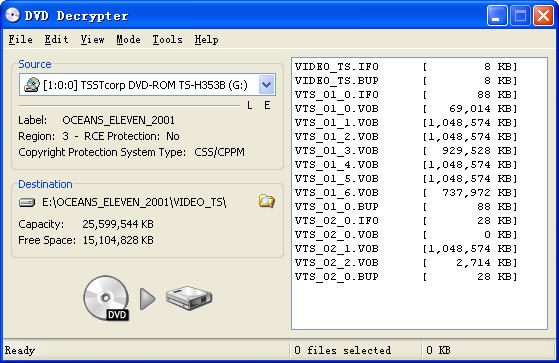
NOTE: If the files are not shown in the right window pane, on the Task Bar, click on Mode and click on FILE F to place a checkmark beside it as shown in the picture above.
You can choose the output folder by:
Under "Destination", click on the Folder out to the right of the movie path, locate the folder you want to rip the DVD to, then double left click on folder to open it then click OK.
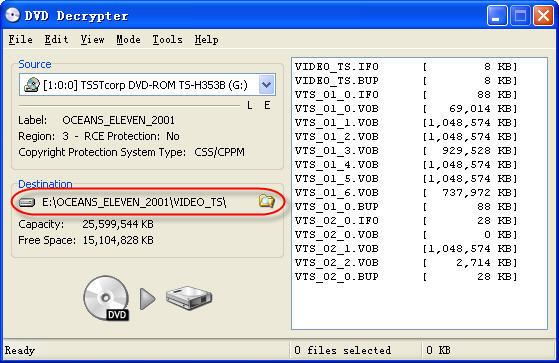
You can select to rip the whole DVD or choose to rip a segment of the DVD.
Explanation:
.IFO = The IFO files includes information such as chapters, subtitle tracks and audio tracks.
.VOB = The VOB files contains the actual video, audio, subtitles and menus.
.BUP = Backup files of the IFO files.
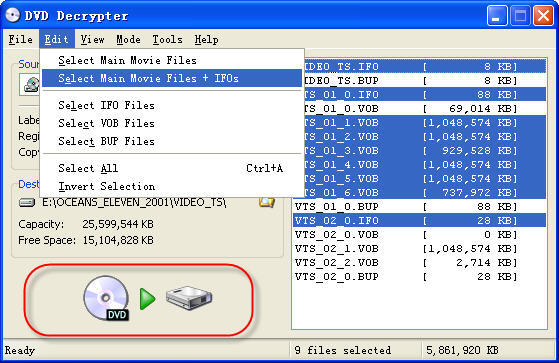
Step 3. Finish conversion
Click on the Hard Drive Symbol to the right of the green arrow. After clicking on the Hard Drive Symbol, you will have the screen which shows the decryption in progress.
After conversion by this free DVD ripper, you can find the VOB files in the "Destination".
2. Convert the .VOB files to video formats compatible with iPod, iPhone, PSP, PowerPoint, etc.
Now you need to use Aiseesoft Total Video Converter to convert .VOB files to formats compatible with popular players such as iPod, iPhone, Apple TV, PSP, etc. You can also upload the converted files form DVD (.VOB) to YouTube, Myspace, and other video sharing site. YouTube accepts a wide range of video file formats such as .WMV, .AVI, .MOV, and .MPG, etc. PowerPoint understands mpeg, asf, avi, wpl. wm, wmx, wmd, wmz, dvr-ms, mpv2, mp2v, mov, etc. If you want to put the VOB files on PowerPoint, you can choose .avi as output format.
Step 1. Download and install Aiseesoft Total Video Converter.
Step 2. Run Aiseesoft Total Video Converter, click "Load DVD" button to import the .VOB files, choose the output format, then click "Start" to start the conversion, the default setting works perfectly.
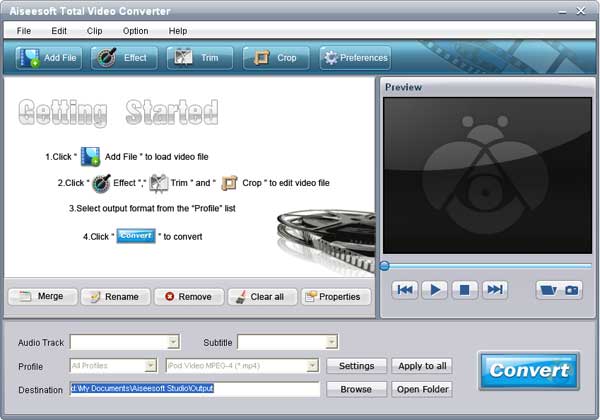
Step 3. After conversion finished, you can use transfer the converted files to the players.
For example :
use iTunes to transfer the mp4 video to your iPod, here are the steps:
1). Open iTunes and click "File" to add your converted videos to iTunes library.
2). plug in your iPod to computer, then iTunes will detect your iPod as a device.
3). Select your iPod device on the left panel of iTunes, click "Movies" tab, check the videos you want to sync and click "Apply", done.
Use Zune software to transfer wmv video to Zune player, here are the steps:
1). Install Zune software, you can download it from here for free: http://www.zune.net
2). Plug in your Zune player to computer
3). Drag the wmv video to Zune library
4). Click "start sync" to sync your Zune. OK.
Tips: Aiseesoft DVD Ripper can rip DVD to all popular video and audio formats directly. It can rip DVD to videos including MP4, AVI, M4V, 3GP, MPG, MPEG, FLV, etc; and it can convert DVD audio to MP3, M4A, AAC, AC3, etc. And it is more easy to use than Mac the ripper. You can have a try.
DVD Decrypter is a free DVD ripper that can create backup disc images of the DVD-Video structure of DVDs. It can be used to image any DVD, but controversially it is especially useful for decrypting copy-protected movies. The program can also burn images to disc. CSS decrypting software (such as DVD Decrypter, AnyDVD, Smartripper, and DVD Shrink) allows a region-specific DVD to be copied as an all-region DVD. It also removes Macrovision, Content Scrambling System (CSS), region codes, and user operation prohibition.
Step 1. Install DVD decypher
Download it from: http://www.dvddecrypter.org.uk/. To install DVD decypher, simply mount the .exe archive by double-clicking it, and setp by step to click "next".
Step 2. Rip DVD using DVD decypher
After you insert a movie DVD into your DVD burner or player, launch DVD Decrypter. In the window to the right you will see all the files on that DVD.
NOTE: If the files are not shown in the right window pane, on the Task Bar, click on Mode and click on FILE F to place a checkmark beside it as shown in the picture above.
You can choose the output folder by:
Under "Destination", click on the Folder out to the right of the movie path, locate the folder you want to rip the DVD to, then double left click on folder to open it then click OK.
You can select to rip the whole DVD or choose to rip a segment of the DVD.
Explanation:
.IFO = The IFO files includes information such as chapters, subtitle tracks and audio tracks.
.VOB = The VOB files contains the actual video, audio, subtitles and menus.
.BUP = Backup files of the IFO files.
Step 3. Finish conversion
Click on the Hard Drive Symbol to the right of the green arrow. After clicking on the Hard Drive Symbol, you will have the screen which shows the decryption in progress.
After conversion by this free DVD ripper, you can find the VOB files in the "Destination".
2. Convert the .VOB files to video formats compatible with iPod, iPhone, PSP, PowerPoint, etc.
Now you need to use Aiseesoft Total Video Converter to convert .VOB files to formats compatible with popular players such as iPod, iPhone, Apple TV, PSP, etc. You can also upload the converted files form DVD (.VOB) to YouTube, Myspace, and other video sharing site. YouTube accepts a wide range of video file formats such as .WMV, .AVI, .MOV, and .MPG, etc. PowerPoint understands mpeg, asf, avi, wpl. wm, wmx, wmd, wmz, dvr-ms, mpv2, mp2v, mov, etc. If you want to put the VOB files on PowerPoint, you can choose .avi as output format.
Step 1. Download and install Aiseesoft Total Video Converter.
Step 2. Run Aiseesoft Total Video Converter, click "Load DVD" button to import the .VOB files, choose the output format, then click "Start" to start the conversion, the default setting works perfectly.
Step 3. After conversion finished, you can use transfer the converted files to the players.
For example :
use iTunes to transfer the mp4 video to your iPod, here are the steps:
1). Open iTunes and click "File" to add your converted videos to iTunes library.
2). plug in your iPod to computer, then iTunes will detect your iPod as a device.
3). Select your iPod device on the left panel of iTunes, click "Movies" tab, check the videos you want to sync and click "Apply", done.
Use Zune software to transfer wmv video to Zune player, here are the steps:
1). Install Zune software, you can download it from here for free: http://www.zune.net
2). Plug in your Zune player to computer
3). Drag the wmv video to Zune library
4). Click "start sync" to sync your Zune. OK.
Tips: Aiseesoft DVD Ripper can rip DVD to all popular video and audio formats directly. It can rip DVD to videos including MP4, AVI, M4V, 3GP, MPG, MPEG, FLV, etc; and it can convert DVD audio to MP3, M4A, AAC, AC3, etc. And it is more easy to use than Mac the ripper. You can have a try.
2010年12月10日星期五
How to watch and play Internet videos on iPod touch and iPhone(3G)
Why do iPod touch and iPhone(iPhone 3G) can not play internet video besides youtube? The reason you can't view videos from other videos sites besides youtube is that they run on something called "Flash". iPhones and iPod Touches can't support Flash because of their software. This is why Apple created the YouTube application on your home screen.
Luckily, someone has done their best to fix this problem.
iTransmogrify! is a bookmarklet for iPhone and iPod touch which transforms embedded Flash content into direct links to natively supported formats. That means YouTube videos and MP3s can now be played from the iPhone's Safari web browser with just a few clicks. The iTransmogrify! bookmarklet recognizes and converts a variety of embedded Flash content from web pages so they will play on iPhone and iPod touch.
Currently supported formats include: YouTube, embeds and YouTube pages, Blip.tv, Revver, TED talks and embedded TED talks, Many embeded flash MP3 players ,Kink.fm podcasts, Flickr badges (videos are unsupported) , The Test Suite has more sites.
To install the bookmarklet, just drag the link to your Safari or Firefox Bookmarks, IE users should right click and choose “Add To Favorites” After adding the link, sync your iPhone or iPod touch.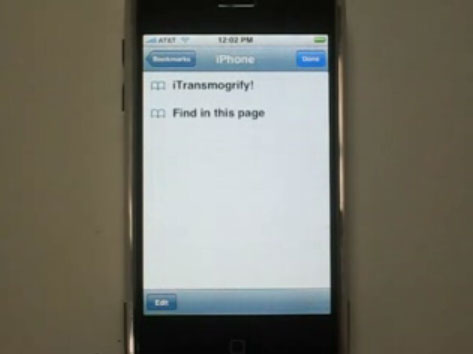
Grab it now: iTransmogrify!
You can also add iTransmogrify from your iPhone!
Then, whenever you find a broken video, just select the bookmark to convert it.
Now, you can watch and play internert videos such as Blip.tv, Revver, TED talks and embedded TED talks, Many embeded flash MP3 players, Kink.fm podcasts, etc on iPod touch and iPhone.
More information, source code and bug-tracking is available on the iTransmogrify Google Code page.
If you want to watch your own videos on iPod touch or iPhone, you can follow this step by step guide: How to convert all video files and extract audio from video on Mac OS X ?
If you want to play dvd movie on iPod touch or iPhone, you can follow this guide: How to rip DVD to all sorts of video and audio files on Mac OS X?
Recommended iPhone 3G Software Links:
DVD to iPhone 3G Converter for Mac
DVD to iPhone 3G Converter for Windows
iPhone 3G Video Converter for Mac
iPhone 3G Movie Converter for Windows
DVD to iPhone 3G Suite for Mac
DVD to iPod touch converter for Mac
2010年12月9日星期四
How to backup DVD movies to DVD for free
This is a tutorial that explains the process of backing up a DVD on a PC using DVD Shrink. While there are many software solutions for backing up DVDs, the one on Windows I like is DVD Shrink. On Mac OS X, I like this DVD Copy for Mac.
that can copy DVD movie (D9 to D9, D5 to D5) with the entire movie in 1:1 ratio perfectly. This tutorial will be a concise explanation of how to backup DVD movie to DVD for free. There are many reasons to make a backup copy of DVDs one has purchased, keep reading to learn how to improve the quality of your re-encoded backups.
Step 1, download DVD Shrink
You can download DVD Shrink from: http://www.DVDshrink.org/.
For Mac users, you can download the DVD copy for Mac from here.
Step 2, Run DVD Shrink and insert your DVD movie into the DVD drive
The first thing you will need to do is open the disc. Click on "Open Disk" at the top-left of the program window. A small window will pop up. There is a drop down menu - select the drive and disk that you are going to backup. Then click OK. When you click OK, the DVD will be “analyzed”–this process will last for 1-3 minutes, then DVD Shrink will “suggest” a level of compression.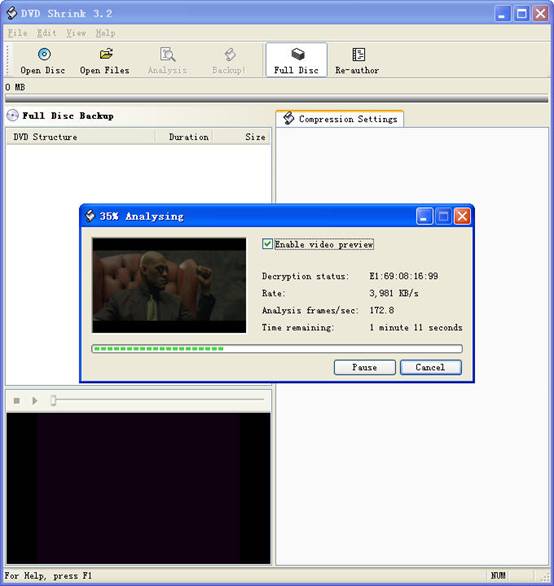
If you receive an error while trying to rip the DVD (like the one shown in the screenshot above), you will need to use another program such as DVD Decrypter to copy the DVD files off of the disc on to your hard drive. You need to minus the copy protections first. Click here to read how to use DVD decypher to minus the copy protections of DVD.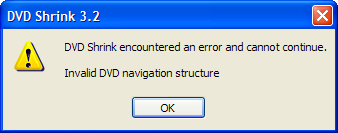
Step 3. Adjust compression for individual Titles (optional).
DVD Shrink will automatically select the highest possible quality settings that will fit on your disc. You could accept the settings that DVD Shrink chooses. You can also increase the quality of the main movie file by reducing or eliminating other video and audio files on the DVD.
Many modern DVDs will contain bonus footage, trailers, multiple surround sound modes, and other settings that one can reduce or eliminate to improve the quality of the main movie feature.
The main movie quality setting is reported to the left of a slider bar in the top right of the screen. In the screenshot below we see that the default setting requires that the main movie be compressed to 48.2% of its original level to fit on the disc. You can increase this percentage to improve the final quality of the backed-up DVD. But the output file will be larger.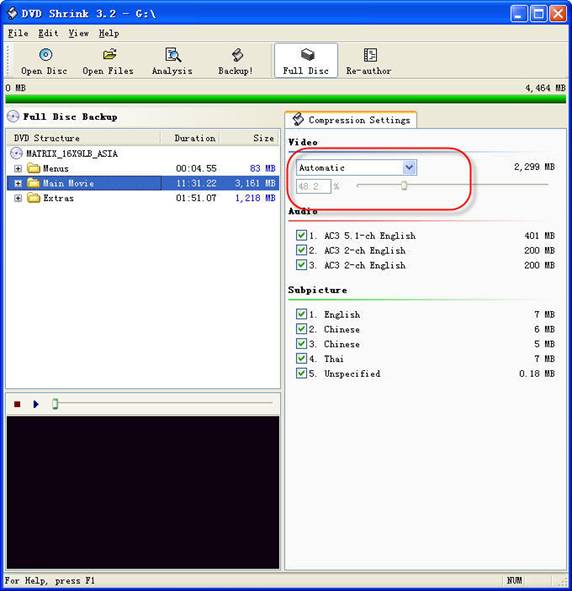
The way in which one goes about improving the quality of the main movie will be different depending on your specific needs. For example, when “Dolby Digital” and “DTS” 5.1 audio tracks are available, you can remove “DTS” (to save hundreds of megabytes), you can also choose to preserve “DTS” and reduce or eliminate other items from the DVD.
Some of the settings I made to this particular DVD were:
--Removed “5.1-ch French” audio track (went from 48.2% to 55.4% compression for main movie).
--Replaced certain Titles with “Still Image” (keep reading for more on this).
To improve the quality of the main movie, you'll need to reduce or eliminate other DVD features, each called a “Title” in DVD Shrink. Click the “plus sign” next to “Extras” in the menu to view the other titles.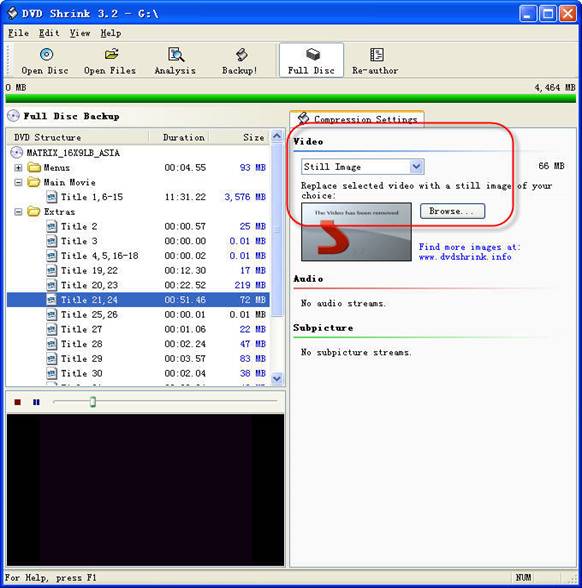
The Title I've selected below was 72MB. In this case the video was a “behind the scenes” feature that I did not wish to keep. Since one cannot completely remove any of the “Titles,” the next best thing is to replace them with a still image. In order to do this, select the title you want to replace, and choose “Still Image” from the drop-down menu in the top right. In this case the file went from 72MB to 66MB. The still image is configurable, simply drop an image of your own into the aptly named Still Images directory found under Program Files > DVD Shrink.
Step 4, Burn the re-encoded files to disc.
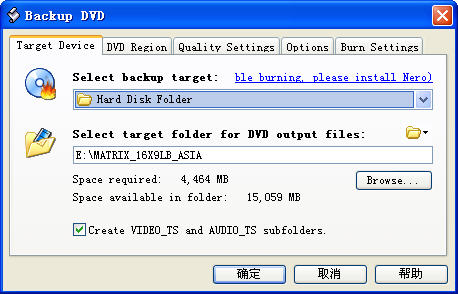
Click “Backup DVD” and Now select the folder where your temporary files will be saved. DVD Shrink needs to save a bunch of files on your computer (that actually compose your movie) so that it can burn that movie back onto another DVD. This is why you had to clear 5 gigs of space on your hard drive. Once the DVD backup has been burned, you can go ahead and delete these temporary files (the program does not do this itself).
You may as well select “Region Free” (default) under the DVD Region tab.
on the Burn Settings tab make sure “Maximum” burn speed is selected in the drop-down menu.
Once you have the settings the way you like them, begin the burn process. You'll see the “Encoding” happening first. There is a video preview that will show you where you are, but I believe that the encoding process goes slower with this setting enabled.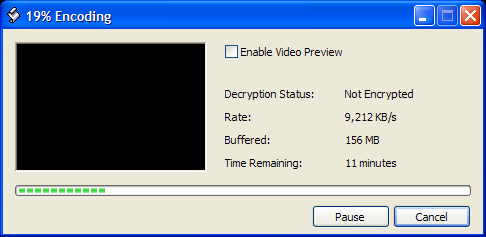
Once the files have been copied to your hard drive, your original DVD movie will eject from your computer.
You will also have a pop up asking you to put a blank DVD into the DVD burning drive of your computer that you previously selected.
Exchange the original DVD movie for a blank, burnable DVD. Push the blank DVD into the drive. DVD Shrink will begin burning the new DVD automatically in a few seconds. Now you will get a pop up that shows the progress while the program burns your new DVD movie. Once the new DVD has been burned, you will get a window that tells you that it's done. Click OK, close the program, and take your new DVD movie backup. All Done!
Note: DVD Shrink is only for PC users. If you are a Mac user, Please download DVD copy for Mac .
2010年12月8日星期三
Plantronics Takes Voyager Where No Headset Has Gone Before
Mobilized still thinks that people look dorky with Bluetooth headsets in their ear. That said, we also don’t like seeing car wrecks, so we admire their value to society. What’s interesting, though, is that the things are suddenly taking on more features.

In a demo at D: Dive Into Mobile, Plantronics, a well known name in the space, is showing off a new member of its Voyager line that can funnel audio not just to and from a cell phone, but also to the PC for either Skype or Microsoft’s Office Communications Server.
The Voyager Pro UC looks like the company’s current model but can now intelligently route audio to multiple places. It can even notify Skype and the Microsoft communications software that you are busy if you answer a call on any of the three systems. Pricing for the device hasn’t been set yet and it’s set to ship some time in the first quarter of next year.
Initially it will be Windows-only, but Mac support is planned. Plantronics also expects that, by launch, the device will support unified communications products from Cisco, IBM and Avaya, in addition to Microsoft’s software.
2010年12月7日星期二
Google’s Andy Rubin Gives a Flash of Tablet Future
Although Andy Rubin’s keynote at D: Dive into Mobile is scheduled for just before dinner, expect to hear a lot of talk about dessert. On the menu are Froyo, Gingerbread and perhaps even a hint of Honeycomb.
Google did release a couple of tasty treats already on Monday–announcing plans for the Samsung co-developed Nexus S as well as the release of Android 2.3 (Gingerbread). But I hear the cookie jar isn’t quite empty yet.
In between sugary snacks, Kara Swisher and Walt Mossberg will pepper Rubin on the many issues facing Android and the wireless industry. Mobilized will have live coverage of the session at this spot beginning around 6:45 pm PT.
Liveblog
6:37 pm: The crowd is still settling into their seats here at the Ritz-Carlton San Francisco, the swanky home to the inaugural D: Dive Into Mobile.
6:40 pm: Lights dim. Kara Swisher and Walt Mossberg take the stage. “My husband, Walt Mossberg, and I would like to welcome you to this intimate dinner,” Swisher quips.
6:42 pm: Ironically, the crowd was asked to silence their mobile devices, but Kara says they should just feel free to leave them on.
6:44 pm: It’s Rubin time (and he has brought a satchel of goodies with him).
Rubin is asked about the Nexus One and why it didn’t shake up the business model. “We bit off a little more than we can chew.” Rubin says that they were hoping for a model more like that in Europe, where people can pick a phone and then separately pick service, typically at retail stores like Carphone Warehouse. “We were trying to do that model in the U.S. and only do it online.”
6:46 pm: Kara: So have you given up on that business model?
Rubin: With Nexus S, which is the thing we announced today, we still have that notion of an unlocked phone. But we are not selling it ourselves, but through traditional channels, in this case Best Buy.
6:48 pm: Walt: How is Android doing?
Rubin: Android started as an eight-person start-up. “During that time at Google we obviously staffed up.” Now there are 172 different phone models using Android after the OS was launched two years ago with one, the T-Mobile G1.
Rubin credits the quality of the software and the open nature of it.
6:49 pm: Walt: I notice more and more they are taking on the personality of the carrier, not Google, not the handset maker. There are lots of what I would call craplets. Verizon, for example, swapped out Google for Bing. Is there a danger it is being taken over?
Rubin: That’s the nature of open. That’s actually a feature of Android.
He takes a swipe at Windows Mobile, saying that the alternative is a commoditized world where all the phones have to have a start menu in one place and all the icons have to be tiles.
6:54 pm: Kara: Do you consider yourself the Microsoft of phones in that regard?
Rubin: No. We’re probably more like the Linux of phones, and that’s a true statement.
Walt: You mean hard to get drivers for, only for geeks, no real consumer would buy it?
Rubin: No, I think we’ve already proven that wrong. Bad analogy.
6:55 pm: Discussion about all the crapware that comes on many phones.
Rubin: The consumers are voting and the consumers are voicing their opinions.
6:56 pm: Rubin has some relatively nice things to say about the iPhone.
“I think everybody is embracing the iPhone. They are pretty open.”
Rubin says that most developers actually are having a pretty easy time getting their apps approved by Apple.
6:57 pm: Kara: How do you consider Apple as a competitor?
Certainly they make great products, Rubin says–robust, solid, good user experiences. A lot of consistency across applications. More recently I see them getting involved in the other end of the spectrum–services like a bookstore, the app store.
6:59 pm: Walt: What about Apple’s massive data center? That’s another area of competition for you guys.
Rubin talks about the power of Google’s ad-based model, which allows the core advertising to fund all kinds of applications.
Walt: Do you think Apple has the DNA to do this?
Rubin: “My assumption is Apple is a company that learns from its mistakes.”

7:01 pm: Kara and Walt: Are you profitable? Is Android profitable? Does Android make any money?
Rubin: We’re making money on the advertising that’s generated through Android.
Walt: Are you profitable if it was broken out as a separate business?
Rubin: Yes. [Wow. I'm curious about the math, but maybe if you add all the searches on Android-based devices.]
There’s no way I would have ever been profitable as a start-up. I probably wouldn’t have made it as a separate company.
7:06 pm: Walt: How do you see the rest of the competition beyond Apple?
Rubin: I don’t think it’s ever going to be just two [Apple and Android]. There’s a lot of innovation and a lot of ideas out there.
Rubin says there is a fundamental advantage to Android and iPhone since they are new and designed from the ground up.
He notes even Windows Phone 7 has legacy code from the original Windows Mobile from way back when.
“You just have this package of stuff that was invented before the Internet,” Rubin says. “When the architects built that product, they didn’t have the Internet in mind.”

7:08 pm: Walt: Is there anything you do like about Windows Phone 7?
Rubin: It was a big bet. They struck upon that notion of the centerpiece of the main tiles. It’s a good 1.0 product. It does look different and it does look unique. It’s solid. I’m not the predictor of being successful.
He says if he were to give advice to Microsoft, he would suggest that it give more freedom to carriers and phone makers so the devices don’t look the same.
Kara: Have you gone to Finland to woo Nokia?
Rubin: I haven’t been to Finland.
Walt: Forget Finland, have you tried to convince Nokia?
Rubin just laughs (a-ha).
7:12 pm: Kara: The discussions with Nokia–talk about them in detail.
Rubin: The company has new leadership [referring to CEO Stephen Elop]. They are evaluating lots of alternatives. I’m open-minded and a big proponent of Android.
Rubin again declines to talk about any meetings he may have had.
7:14 pm: What about the challenge of iconic products like RIM?
Rubin: Talks about the challenge of legacy and points out Motorola had that problem when it became overly dependent on the Razr. Then, “they bet the company on Android,” he points out.
Rubin said RIM is doing the right things–acquiring assets like QNX and DataViz to build a more modern operating system.
7:16 pm: Walt points out that RIM will be here Tuesday–PlayBook tablet in hand.
7:16 pm: Back to the discussion about persuading companies to use Android.
Rubin: If it’s good–and we all believe that it’s good–everybody can use it.
“You don’t need to be a partner of Google to run Android.”
7:17 pm: Walt asks about tablets. Are they exciting to you? Are they important to you? Can they replace laptops for some people?
Rubin: I think what is going on in tablets is interesting. It’s fundamentally changing the model of computing interaction.
It is much more physical. You touch it. You feel it.
7:19 pm: What changes in the paradigm? It’s not a laptop. It’s not a phone.
Rubin points out that we used to have PDAs, but the cellphone eventually replaced it. The tablet is a sort of in-between device so the use case is less clear. You might definitely have it on the couch, but maybe not on the subway.
7:21 pm: Walt: What makes it more interesting and more immersive? There is something different there?
Rubin: If you do a good job, what you’ve done is make it a reflex. Like a car. You learn how to drive and you can drive almost any car. You don’t get distracted by things. That’s the result of many, many years of evolution. That’s true of any consumer product. They become almost like second nature for you.
7:24 pm: Kara and Walt ask about privacy.
Rubin: There is nothing in open source Android OS that sends keystrokes or what applications you use to Google.
He encourages people to look at the source code.
Walt: There are Google services that do collect certain things?
Rubin: Yes, like on other platforms. But he encourages people to read the company’s privacy policy.
7:27 pm: How do you overcome the perception that Google wants to collect more information than the others?
I think you just have to be transparent. You have open source–be inspectable. Any other interpretation is either FUD or just people who don’t understand.
7:28 pm: On to the goodie bag. Rubin pulls out a Nexus S. Says it is his personal device.
Kara: Oh good. She grabs it and pulls it close to her.
Now Rubin is showing the features, screen, etc. He’s talking about the Near Field Communications technology that is actually printed inside the back of the case. NFC allows a phone to scan specially printed tags.
Walt: Is that what sends all the information back to Google?
Rubin: Laughs. Goes back to demoing NFC and showing the Nexus S scanning a tag, which sends a URL for a video of the Nexus S to the phone, which then starts playing.

7:31 pm: Rubin talks about the applications: Buying coffee, getting coupons.
What we are hoping is third-party developers create a lot of cool apps. Devices can also use NFC to exchange contact info between two devices as well, kind of like beaming in the old Palm days.
7:32 pm: Rubin is talking abut the Nexus strategy.
To give a “Pure Google” phone. Google works with the hardware maker to take maximum advantage of Android’s features.
7:35 pm: What’s new with Gingerbread?
We added a garbage collector. Added broader voice over Internet Protocol support. Can cut, copy and paste without a trackball.
7:36 pm: Walt: What about video calling? I know there are third-party apps that do that. It seems like a natural thing that it belongs in the phone function.
Kara: FaceGoog or GoogleTime.
Rubin: There’s a whole bunch of software engineers hitting their keyboards back in Mountain View. If consumers want it, we’ll add it. [He strongly hints that it is coming, points out there already is Google video chat for PC.]
7:38 pm: Rubin reaches into his bag of tricks again. Pulls out a prototype Motorola tablet to show a forthcoming version of Google’s mobile map application.
7:38 pm: Shows the improved 3-D abilities and new panning and zooming options. What we are showing off here is some pretty cool performance.
“It will be available for cellphones in a matter of days,” Rubin says.
What allows the new presentation is that maps are no longer a series of tiles, but rather vector graphics.
7:40 pm: Vector data is smaller and more efficient, so users can load data in case they go offline. “You could load a whole state,” Rubin says.
This app runs on Android only for now, though it will work on tablets and phones.
Walt: What about PCs?
Rubin: That would be a natural extension.
7:41 pm: What version of Android is running on that tablet?
Rubin: Honeycomb [the next version of Android, due out some time next year]. There are no buttons on the Motorola tablet. He’s showing his personal email again.
7:43 pm: More on Honeycomb: We added new APIs to Honeycomb that allow an application to split its views to multiple views. On a a tablet they can be side by side, while on a phone they might be one after the other.
7:46 pm: On to Q&A.

7:46 pm: What about the Chrome OS team? What’s the delineation between the two?
Rubin: That’s a good question. Google was born on the Web. “I don’t think it would be doing its job unless it reinvested in the Web.”
But evolution of the Web had stagnated a bit, prompting Chrome. “It’s kind of slowed down a bit.”
Apps vs. Web?
There’s no need to argue. We’re doing both, Rubin says.
7:50 pm: What are the plans for the Android team to focus on the enterprise?
We did a little bit, Rubin says, but he likens it to baby steps. Support for VPN and some secure browsing. Gingerbread has some added features like remote wipe. Each release you will see more and more.
7:51 pm: App discovery. What are your plans?
Rubin: This is all evolving. The Android market is evolving as well. Gingerbread allows “related applications.” We are always adding features.
As a search company, if we can’t help you discover apps, I think we have a problem. We should be very easily able to organize a few hundred-thousand apps.
7:53 pm: Question about mobile payments; What is Andy Rubin’s vision? Groupon?
Rubin: I think there is a lot of opportunity. It is not an opportunity that is going to be seized by one company. Today Android does carrier billing integration, so you can put apps on your carrier bill. Creates an efficient micropayment option.
With Nexus S having added gyroscope capability, can see things from even within a store. Should help make, for example, better coupon apps.
7:57 pm: Android on TVs?
Rubin: That’s exactly what Google TV is. It is Android running on a set-top box. The first versions of that are running an Intel processor.
Have demonstrated the same app can run on both a three-inch screen or a flat-panel TV.
People are building all kinds of things. Refrigerators, ovens, automotive. Rubin says the nice thing about open source is that he and Google don’t have to be involved in every use. “We knew what to do to make it scale as widely as possible.”
7:58 pm: Question about carrier data plans and pricing.
Rubin: Average usage on an Android phone is 440MB a month. Rubin points out we are at a bandwidth crunch, but that it tends to be a cycle. New networks tend not to be overwhelmed by demand at first, but then the demands grow. Then new networks come along.
How should OEMs try to differentiate?
Rubin: I think HTC has done a really good job with Sense. Motorola has Blur. People are really differentiated.
Rubin says he often hears complaints about fragmentation. “Fragmentation” is the wrong word. Different phones do things differently, but that’s differentiation. Basically the apps are still compatible, Rubin says.
8:04 pm: Is Android too clunky? Will we see a sea change where Android really gets more user friendly?
Rubin: I would probably characterize Android today as an enthusiast product for early adopters–or wives of tech enthusiasts.
8:05 pm: Rubin says the company made some concessions that led to “geeking it out.” But then there are apps that offer easier customization and personalization.
8:07 pm: Walt points out places where it requires an extra step to do things like compose an email, while the iPhone does it in a single step.
Rubin: Yep. We get it. You will see the fruits of that investment in the tablets first and then in the phones. It’s going to get better. Honeycomb will be a good start
8:08 pm: Applause and they exit stage. ‘Night.
2010年12月6日星期一
Verizon’s 4G Network Is Windows-Only, for Now
Those who want to be among the first to rule the air on Verizon Wireless’s new 4G network better have a Windows PC handy.
It turns out that the LG laptop modem that goes on sale Sunday–the only option at launch–is Windows-only, at least for now. (Verizon was nice enough to send out some demo units to reporters and I quickly noticed that the card works with Windows XP as well as both 32-bit and 64-bit versions of Vista and Windows 7, but not with any non-Microsoft operating system.)
Verizon had already made clear that, for the rest of this year at least, the company will have only laptop cards and that 4G smartphones wouldn’t come until next year. However, it looks like Mac users will also have to wait a little while.
A Verizon Wireless representative said that Mac drivers for the LG card are in the works and should come “in the near future.”
For those who do have a Windows computer handy, the new network launches on Sunday in 38 cities (as well as 60 airports). It’s pretty zippy too, offering downloads of 5 to 12 megabits per second and uploads of 2 to 5 megabits per second. Pricing starts at $50 a month for 5GB of data.
2010年12月5日星期日
How to play iPod video on TV
You may often confused with how to play iPod video on TV without Apple TV? Here is a guide to do this.
Note: This method is not usable for the 6th generation iPod.
What You'll Need
In order to get your iPod connected properly to your TV, you'll need the following items on hand:
A video-capable iPod. Any color will do.
An iPod-compatible video. Load it onto your iPod through iTunes.
Note: iPod accepts mp4 video detail as: MPEG-4 video, up to 2.5 Mbps, 640 by 480 pixels, 30 frames per sec., Simple Profile with AAC-LC audio up to 160 Kbps, 48 kHz, stereo audio in .m4v, .mp4, and .mov file formats.
If your videos are not iPod format files, you can use Aiseesoft iPod Video Converter for Mac to convert videos to iPod format files. Aiseesoft iPod Video Converter for Mac is one of the best video to iPod converters on Mac os which can convert MP4, 3GP, AVI, WMV, RM, MPEG, and FLV to iPod video with very high quality and various output settings in high speed(>300%). If you use Windows, you can use iPod movie converter for windows.
An A/V cable. If you don't already have an eighth-inch-to-RCA cable, you can pick one up on eBay for five or six bucks shipped. Search for "camcorder A/V cable." Remember, you want a three-plug yellow/red/white RCA connection at one end and a three-banded eighth-inch (3.5mm) A/V plug at the other.
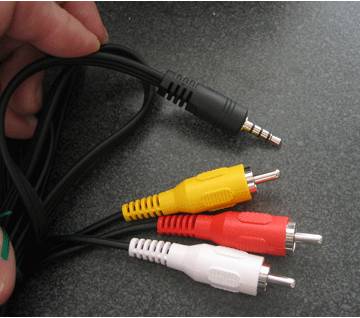
Figure 1. A camcorder A/V cable has a three-plug RCA connection at one end and a three-banded 1/8" plug at the other
Setting Up Your iPod Video Options
Setting up your iPod video options lets you control how you export video. The iPod Video Options screen selects how your iPod handles video file playback.
To open these settings, choose Videos -> Video Settings from your main iPod menu. This screen offers three settings: TV Out, TV Signal and Widescreen. Adjust to produce the video playback style you need.
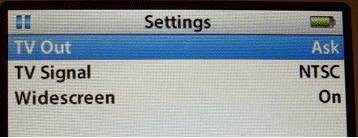
Figure 2. Videos -> Video Settings controls the way your iPod plays back video files
TV Out
Whenever you play a video file, your iPod must make a choice. Video iPods either play video on the built-in screen or they transmit a video signal out of the microphone jack. They don't do both. The TV Out option controls which behavior occurs.
Use this setting to choose from:
No. Playback remains on the iPod itself.
Yes. A TV signal is produced.
Ask. The iPod prompts you whenever you play a video file.
I always use the Ask option. Yes, it does add an extra step whenever I play a video file, but it gives me the flexibility to choose playback behavior on a case-by-case basis. I like that.
TV Signal
European and Australian television sets use a different signal standard than those used in America and Japan. If you live in the U.S., your TV works with the NTSC standard. European countries mostly use PAL. Make sure you've selected the correct signal for your country.
Widescreen
iPods can play back widescreen video, if only on exported video. The built-in screen uses a traditional 4:3 screen ratio, rather than widescreen's 16:9 proportions. Choose Yes to produce a widescreen signal, or No to export the traditional TV output.
Connecting the iPod to TV
It takes a few steps to connect your iPod to your TV. Start by inserting the A/V cord's eighth-inch plug into your iPod's earphone jack. In it goes, schnickt. Couldn't be eas.
Here's where it gets a little tricky. In order to make your TV play back the iPod signal, you've got to redirect the outputs. You can't just plug the yellow RCA plug into the yellow RCA jack and the red into the red or the white into the white. No. Those geniuses at Apple send the video signal over the red RCA output. (Normally it arrives on yellow.) The sound comes through the white and yellow plugs.
I ended up going to an Apple store and testing this on iPod after iPod. They all have this quirk. It was intentional. But hey, it's proprietary. Woohoo. So here's what you have to do:
- Plug the red RCA plug into your TV's yellow RCA jack.
- Plug the yellow RCA plug into your TV's white RCA jack.
- Plug the white RCA plug into your TV's red RCA jack.


Figure 3. Left: TV jacks, unplugged; right: TV jacks, plugged with A/V cable.
After making all of these connections, you're physically ready to begin playback.
Playing Your Video
On your iPod, navigate to the movie you want to watch and select it. Your iPod prompts you to choose whether to play the video with TV Off or TV On. (You set the TV Out option to "Ask," remember?) Choose TV On.
Figure 4. Choose TV On to redirect the video through the earphone jack.
As your video starts, a status screen appears on your iPod and the video plays back on your television. The status screen tracks playback progress, just as it would in iTunes.
Figure 5. The iPod video status screen shows playback progress.
Leave the television volume control at normal levels and use the iPod volume control to adjust the audio. The audio and video should both sound and look excellent.
Note: This method is not usable for the 6th generation iPod.
What You'll Need
In order to get your iPod connected properly to your TV, you'll need the following items on hand:
A video-capable iPod. Any color will do.
An iPod-compatible video. Load it onto your iPod through iTunes.
Note: iPod accepts mp4 video detail as: MPEG-4 video, up to 2.5 Mbps, 640 by 480 pixels, 30 frames per sec., Simple Profile with AAC-LC audio up to 160 Kbps, 48 kHz, stereo audio in .m4v, .mp4, and .mov file formats.
If your videos are not iPod format files, you can use Aiseesoft iPod Video Converter for Mac to convert videos to iPod format files. Aiseesoft iPod Video Converter for Mac is one of the best video to iPod converters on Mac os which can convert MP4, 3GP, AVI, WMV, RM, MPEG, and FLV to iPod video with very high quality and various output settings in high speed(>300%). If you use Windows, you can use iPod movie converter for windows.
An A/V cable. If you don't already have an eighth-inch-to-RCA cable, you can pick one up on eBay for five or six bucks shipped. Search for "camcorder A/V cable." Remember, you want a three-plug yellow/red/white RCA connection at one end and a three-banded eighth-inch (3.5mm) A/V plug at the other.
Figure 1. A camcorder A/V cable has a three-plug RCA connection at one end and a three-banded 1/8" plug at the other
Setting Up Your iPod Video Options
Setting up your iPod video options lets you control how you export video. The iPod Video Options screen selects how your iPod handles video file playback.
To open these settings, choose Videos -> Video Settings from your main iPod menu. This screen offers three settings: TV Out, TV Signal and Widescreen. Adjust to produce the video playback style you need.
Figure 2. Videos -> Video Settings controls the way your iPod plays back video files
TV Out
Whenever you play a video file, your iPod must make a choice. Video iPods either play video on the built-in screen or they transmit a video signal out of the microphone jack. They don't do both. The TV Out option controls which behavior occurs.
Use this setting to choose from:
No. Playback remains on the iPod itself.
Yes. A TV signal is produced.
Ask. The iPod prompts you whenever you play a video file.
I always use the Ask option. Yes, it does add an extra step whenever I play a video file, but it gives me the flexibility to choose playback behavior on a case-by-case basis. I like that.
TV Signal
European and Australian television sets use a different signal standard than those used in America and Japan. If you live in the U.S., your TV works with the NTSC standard. European countries mostly use PAL. Make sure you've selected the correct signal for your country.
Widescreen
iPods can play back widescreen video, if only on exported video. The built-in screen uses a traditional 4:3 screen ratio, rather than widescreen's 16:9 proportions. Choose Yes to produce a widescreen signal, or No to export the traditional TV output.
Connecting the iPod to TV
It takes a few steps to connect your iPod to your TV. Start by inserting the A/V cord's eighth-inch plug into your iPod's earphone jack. In it goes, schnickt. Couldn't be eas.
Here's where it gets a little tricky. In order to make your TV play back the iPod signal, you've got to redirect the outputs. You can't just plug the yellow RCA plug into the yellow RCA jack and the red into the red or the white into the white. No. Those geniuses at Apple send the video signal over the red RCA output. (Normally it arrives on yellow.) The sound comes through the white and yellow plugs.
I ended up going to an Apple store and testing this on iPod after iPod. They all have this quirk. It was intentional. But hey, it's proprietary. Woohoo. So here's what you have to do:
- Plug the red RCA plug into your TV's yellow RCA jack.
- Plug the yellow RCA plug into your TV's white RCA jack.
- Plug the white RCA plug into your TV's red RCA jack.
Figure 3. Left: TV jacks, unplugged; right: TV jacks, plugged with A/V cable.
After making all of these connections, you're physically ready to begin playback.
Playing Your Video
On your iPod, navigate to the movie you want to watch and select it. Your iPod prompts you to choose whether to play the video with TV Off or TV On. (You set the TV Out option to "Ask," remember?) Choose TV On.
Figure 4. Choose TV On to redirect the video through the earphone jack.
As your video starts, a status screen appears on your iPod and the video plays back on your television. The status screen tracks playback progress, just as it would in iTunes.
Figure 5. The iPod video status screen shows playback progress.
Leave the television volume control at normal levels and use the iPod volume control to adjust the audio. The audio and video should both sound and look excellent.
订阅:
评论 (Atom)